15 Jul 2026
Weather Patterns Transforming Accumulator Strategies in International Sports Competitions

Weather variability has begun to influence outcomes across multiple sports in ways that directly affect how accumulators are constructed for global competitions, and data from meteorological agencies shows increased frequency of disruptions in events held between 2024 and 2026. Observers note that prolonged rainfall, temperature spikes, and wind shifts alter playing conditions in tennis, horse racing, and soccer while also creating secondary effects on basketball schedules through travel delays, and these changes force adjustments in multi-leg betting structures that span continents.
Shifting Conditions in Tennis and Outdoor Events
Tennis tournaments held on grass and clay surfaces experience the most immediate impacts when precipitation patterns deviate from historical norms, and records indicate that rain delays at major events like Wimbledon and the Australian Open have risen by measurable margins in recent seasons. Those who track accumulator performance find that momentum-based selections become less reliable when matches extend over multiple days due to weather interruptions, while surface consistency suffers from excess moisture or extreme heat that changes ball behavior and player endurance. Researchers at institutions monitoring climate trends have documented how these variables compound across simultaneous tournaments in different hemispheres, creating ripple effects for bettors who combine results from European grass courts with Australian hard courts in the same accumulator.
Track Conditions and Horse Racing Outcomes
Horse racing fields respond quickly to changes in ground conditions caused by rainfall or drought, and data compiled by racing authorities in Europe and North America reveal that wet tracks favor certain running styles while dry, fast surfaces reward speed. Accumulator builders who include races from Ascot, Kentucky Downs, and Melbourne simultaneously must account for localized weather forecasts that diverge sharply, and one analysis of 2025 results showed that unadjusted selections based on prior form suffered higher loss rates when unexpected precipitation altered track ratings mid-meeting. Those studying these patterns observe that incorporating real-time ground reports into multi-race chains improves alignment between expected and actual outcomes across international fixtures.
Basketball Travel and Scheduling Disruptions
Although basketball occurs indoors, weather events influence game schedules through flight cancellations and venue access issues, particularly during summer tournaments and international tours. Figures from sports logistics providers indicate that storms in July 2026 have already forced rescheduling in several North American and Asian events, which in turn shifts player rest periods and performance metrics used in accumulator models. People constructing live bets across basketball halves and sets notice that delayed tip-offs create variance in scoring trends, and combining these outcomes with tennis or racing legs requires updated probability calculations that reflect altered preparation time.
Global Events and Data Integration in 2026
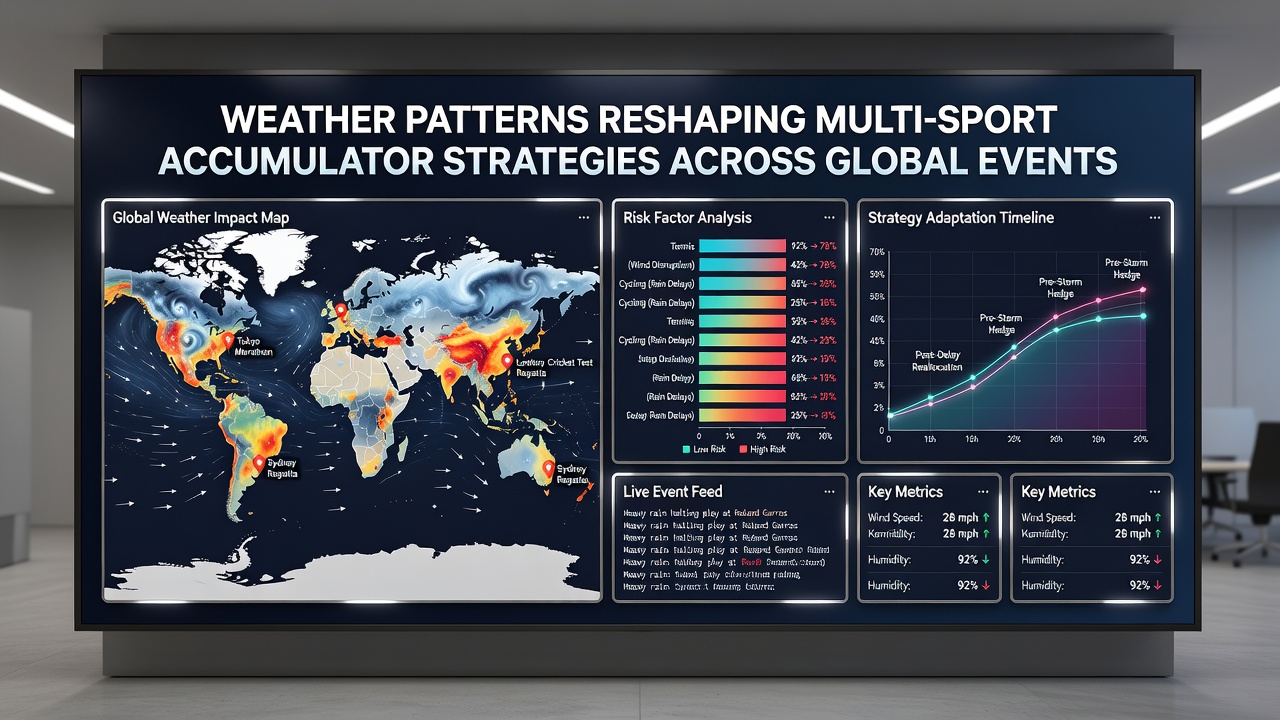
International competitions scheduled for mid-2026 coincide with documented shifts in jet stream patterns that bring atypical weather to multiple regions at once, and reports from the National Oceanic and Atmospheric Administration highlight elevated risks of heatwaves in North America alongside heavier rainfall in parts of Europe and Asia. Those managing accumulators spanning soccer, tennis, and basketball across these zones integrate forecasts from multiple sources to adjust stake distribution and leg selection, and industry reports from the International Sports Climate Research Network show that teams incorporating regional climate data achieve more consistent results in multi-sport chains. Observers note that July fixtures, including expanded summer leagues and pre-season tours, provide fresh datasets for refining these approaches as conditions evolve.
Adaptation Patterns Across Markets
Accumulator strategies now routinely incorporate weather probability layers alongside traditional form analysis, and software platforms used by professional syndicates display real-time meteorological feeds for venues worldwide. Evidence from European and Australian racing bodies demonstrates that selections adjusted for ground hardness and temperature ranges maintain steadier returns over extended periods compared with static models. In tennis, historical data on rain-affected matches reveals shifts in set-length distributions that influence over-under combinations when paired with basketball totals, while soccer goal tallies fluctuate with pitch conditions altered by precipitation. Those reviewing cross-sport performance metrics find that these layered adjustments reduce variance in long accumulator sequences that cover events on different continents.
Conclusion
Weather pattern changes continue to reshape how multi-sport accumulators are assembled for global competitions, and ongoing monitoring by meteorological and sports data organizations supplies the information needed for these adaptations. As July 2026 events unfold under evolving conditions, integration of localized forecasts with performance statistics remains central to maintaining alignment between selections and actual results across tennis, horse racing, basketball, and related disciplines.