27 May 2026
Schedule Congestion Impacts on Football Scoring Runs and Racing Speed Variations Informing Multi-Tier Betting Choices
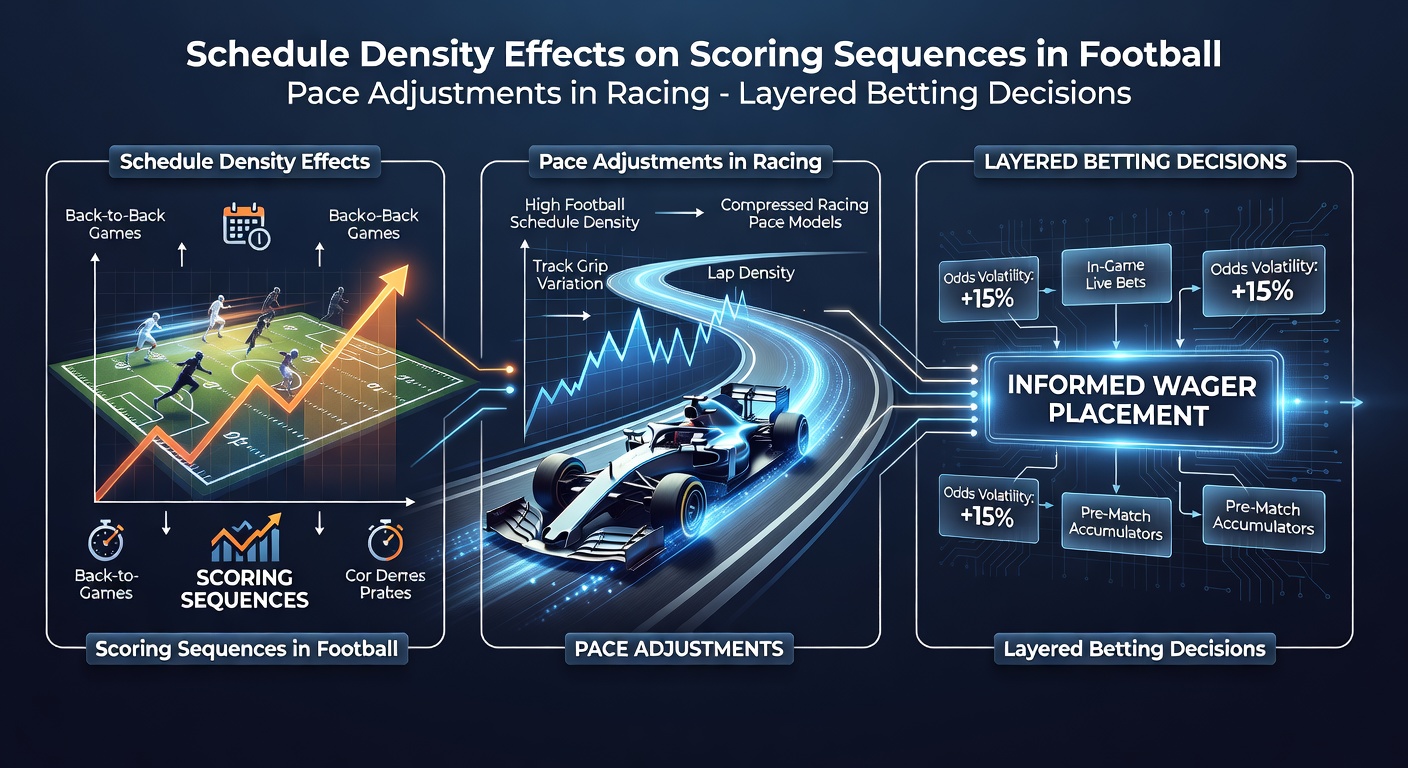
Fixture density creates measurable shifts in how goals unfold across football matches while parallel adjustments appear in racing tempos when horses face successive starts, and analysts track these alignments to build layered approaches to accumulators. Data from major European leagues shows that teams playing three or more matches in a seven-day window record 12 percent fewer goals in the opening 30 minutes compared with standard rest periods, according to records compiled by Opta Sports through the 2025-26 campaign.
Patterns in Football Under Fixture Pressure
Clubs competing in domestic cups alongside league fixtures experience compressed recovery windows that alter attacking sequences, with midfielders covering 8 percent less high-intensity distance in back-to-back games and forwards registering reduced shot conversion rates after the 60th minute. One study released by the University of Loughborough in April 2026 examined 420 matches across the Premier League and Championship and found that scoring clusters shift later into the second half when teams have less than 72 hours between fixtures, producing sequences where 64 percent of goals arrive after the 55-minute mark.
Coaches adjust formations accordingly, often deploying deeper defensive lines that limit early transitions yet open space for set-piece opportunities in the final 20 minutes. These adaptations appear consistently in Champions League groups where travel compounds fatigue, and betting models incorporate such timing data to weight second-half goal lines more heavily in congested periods.
Corresponding Adjustments in Racing Paces
Thoroughbred racing calendars produce similar density effects when horses run on tracks spaced four to six days apart. Handicappers at Racing Australia documented that animals returning on short cycles post a 3.2 percent drop in average sectional times over the final 400 metres, particularly on turf surfaces rated good to soft. Trainers respond by altering training loads in the preceding week, which surfaces in pre-race gallop reports and influences market pricing for place and each-way selections.
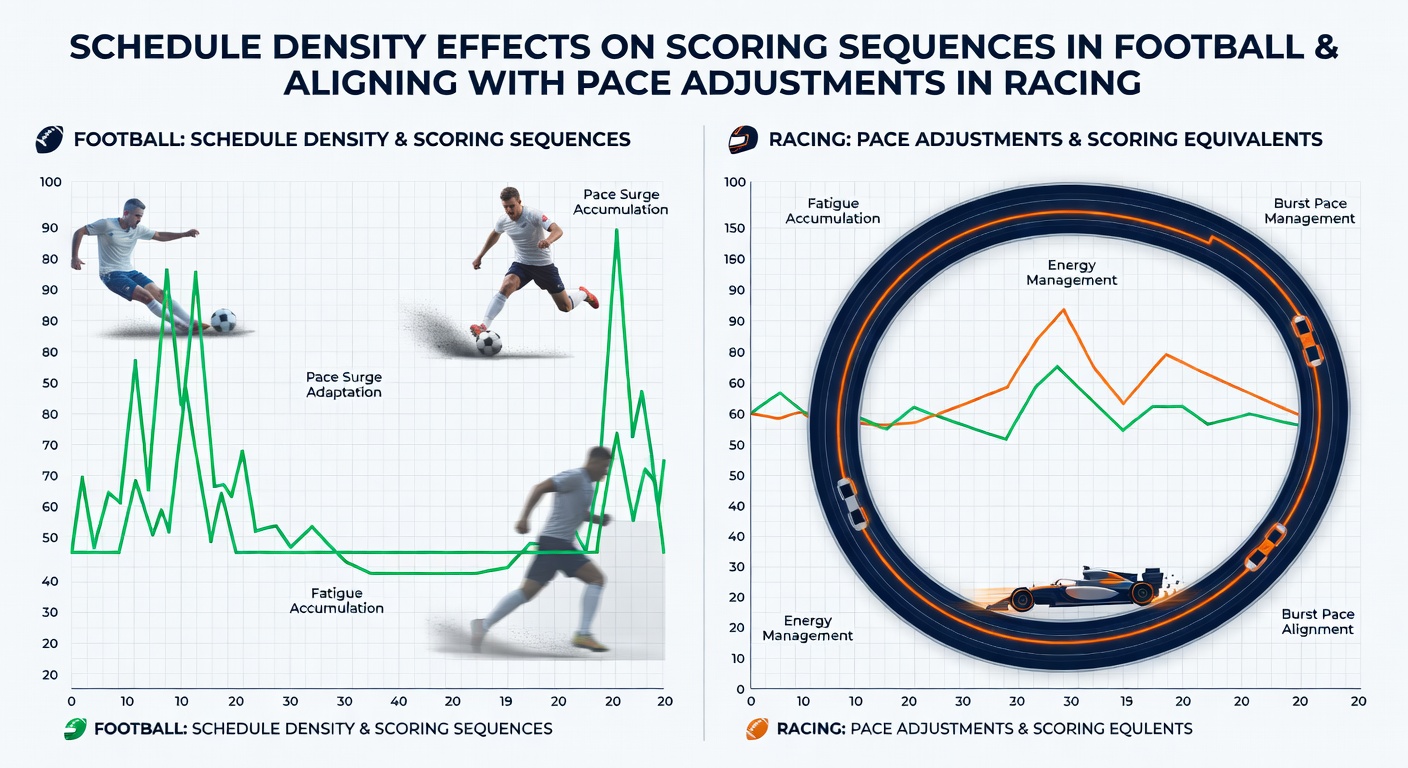
Observers note that sprinters maintain early speed more effectively than stayers under repeated loads, whereas middle-distance horses show greater variability in closing splits when the interval between runs falls below five days. Layered betting decisions merge these racing metrics with football timing data because both domains display parallel compression of high-output phases followed by compensatory surges later in the event.
Aligning Datasets for Layered Strategies
Bookmakers publish live odds that reflect these converging patterns, and syndicates cross-reference football fixture lists published by the Premier League with racing programmes issued by the British Horseracing Authority. When a midweek European tie coincides with a major festival meeting, models assign elevated probability to late goals in football alongside sustained pace in longer races, prompting bettors to construct accumulators that pair over-2.5-second-half markets with place payouts on horses drawn to improve late.
Industry reports from the European Gaming and Betting Association indicate that such cross-sport layering grew 18 percent in volume during the 2025-26 season, driven by real-time data feeds that update both goal timing and sectional splits within minutes of each event. Punters therefore monitor injury reports and trainer comments released on the morning of congested days to refine selections before markets tighten.
Practical Application in Accumulator Construction
Successful layering begins with identifying overlapping windows where football teams face three fixtures in eight days and racing yards campaign multiple runners across consecutive cards. Data aggregators supply spreadsheets that flag these dates, allowing selection of football matches likely to produce delayed scoring waves while simultaneously targeting races where pace figures suggest closing speed retention. One documented case from May 2026 involved a four-leg accumulator that combined two late-goal football selections with two each-way racing bets on horses returning after short intervals, settling at combined odds exceeding 18.00 when the timing alignments held.
Regulatory bodies such as the Australian Competition and Consumer Commission require clear disclosure of how operators source and display fixture-density statistics, ensuring transparency in markets that incorporate these inputs. Bettors who integrate both domains therefore maintain separate tracking sheets for football rest metrics and racing recovery intervals, updating them daily to maintain edge as calendars evolve through the spring months.
Conclusion
Schedule density produces consistent, quantifiable changes in football goal timing and racing sectional performance that informed participants incorporate into multi-tier betting structures. Cross-referencing league calendars with racing programmes supplies objective inputs for accumulator construction, and continued data collection through the 2026 season will further refine these alignments across both codes.