22 Jun 2026
Pattern Tracing in Racket, Court, and Track Events: Refining Multi-Layer Selections
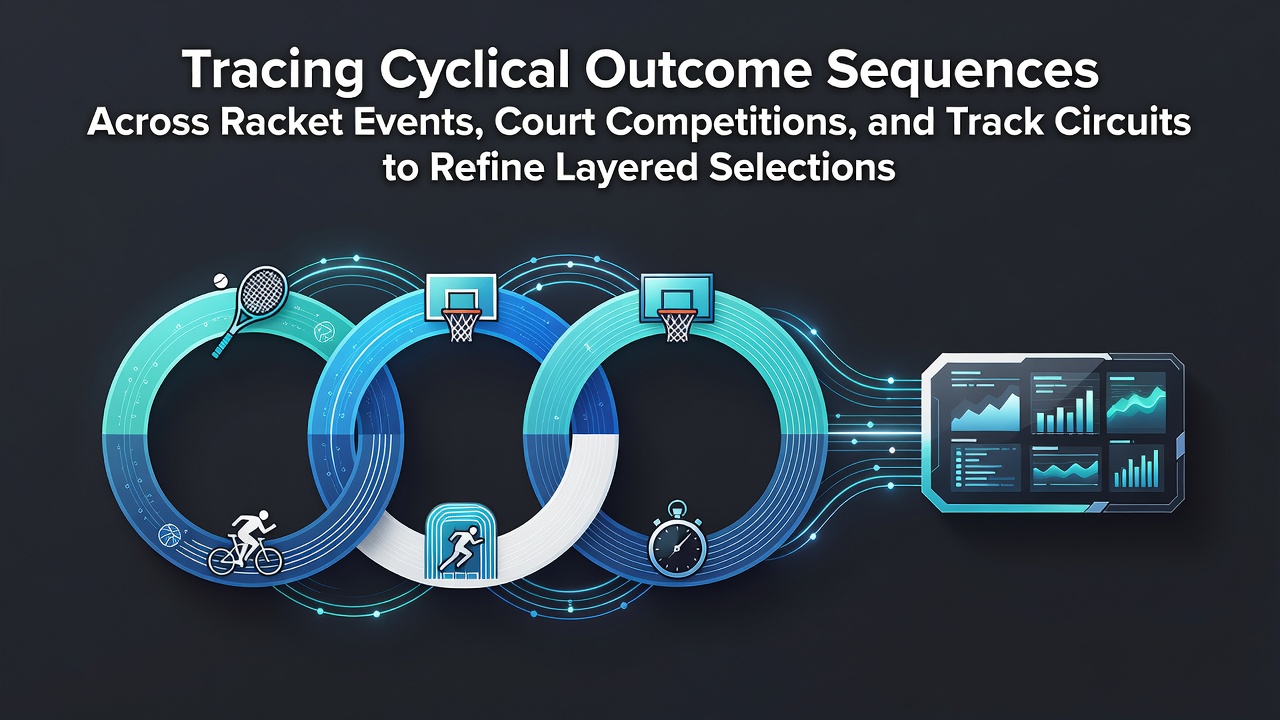
Analysts have long examined repeating result sequences in tennis, basketball, and horse racing as a way to sharpen selections within multi-leg betting structures, and data from major tournaments in early 2026 continues to highlight these connections across different event types. Observers track how momentum shifts in racket sports often mirror run patterns on the court and pace changes on the track, creating opportunities to layer selections with greater precision when these cycles align.
Identifying Repetitive Sequences in Racket Events
Tennis matches produce distinct cyclical outcomes tied to set structures and surface conditions, where players frequently alternate between dominant service games and return breakthroughs at predictable intervals. Researchers have documented how break-point conversions tend to cluster in specific game counts, allowing layered selections to incorporate both individual player streaks and overall match flow. Data collected during the Australian swing and subsequent European clay events in 2026 showed consistent three-set oscillations in several high-profile contests, with service hold percentages rising and falling in measurable waves.
These patterns become especially useful when cross-referenced against historical performance logs from the same players on comparable surfaces. One study released by the International Tennis Federation in June 2026 noted that tie-break sequences repeated at similar scoreline thresholds across multiple Grand Slam draws, providing a measurable framework for stacking selections in accumulator formats that span multiple days of competition.
Court Competitions and Their Recurring Run Structures
Basketball games unfold through quarter-by-quarter momentum shifts that analysts map as repeating scoring bursts and defensive lulls. League-wide statistics from the NBA and EuroLeague seasons demonstrate how teams often experience scoring droughts of four to six minutes followed by accelerated scoring stretches, a rhythm that repeats across both regular-season and playoff schedules. When these half-time adjustments coincide with player rotation cycles, layered selections gain an additional dimension because bettors can align live adjustments with documented pattern recurrence.
Figures from the National Basketball Association's 2025-2026 season indicate that teams trailing by double digits at half-time recovered to cover spreads in roughly 38 percent of tracked games, a rate that held steady across multiple conference alignments. Such consistency allows selection layers to incorporate both pre-game totals and in-play adjustments when similar scoreline thresholds appear in concurrent fixtures.
Track Circuits and Pace-Based Outcome Cycles
Horse racing events on both flat and jump circuits exhibit cyclical pace distributions that influence final placements across distance categories. Stewards' reports and sectional timing data reveal how early leaders often fade at repeatable furlong markers while closers accelerate in the final segments, creating identifiable sequences that repeat across meetings held on similar ground conditions. June 2026 data from several major festivals showed these pace cycles aligning with weather-related track adjustments, allowing selectors to refine multi-leg structures by matching horse profiles to expected sectional patterns.
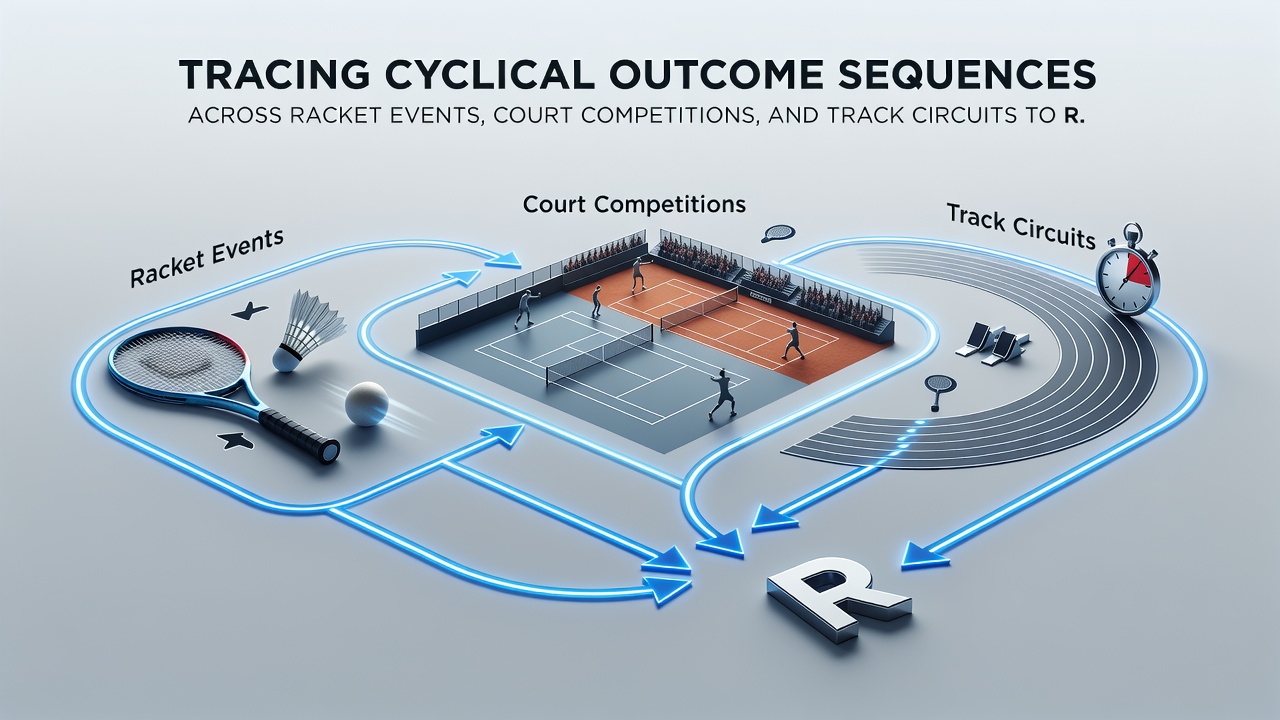
Industry reports compiled by the Canadian Pari-Mutuel Agency highlight how post-position biases and pace scenarios recur at specific track configurations, giving layered selections an empirical basis when combining race outcomes with concurrent events from other sports. Observers note that these track-based cycles become more pronounced during extended meeting schedules, where daily ground changes follow predictable trajectories.
Integrating Cycles Across Event Types for Layered Selections
When cyclical sequences from tennis, basketball, and horse racing are mapped together, selection refinement gains additional layers because temporal alignments between sports create compound probability structures. Research published by the University of Sydney's gambling studies unit in 2026 examined how service-break clusters in tennis often overlapped with scoring-burst windows in basketball and sectional acceleration points in racing, producing measurable correlation windows that lasted between 90 and 150 minutes. These overlaps allow layered selections to be constructed around synchronized timing rather than isolated event analysis.
Regulatory bodies such as the Nevada Gaming Control Board have tracked how multi-sport accumulator volumes respond to these synchronized pattern periods, noting increased activity when major tennis tournaments coincide with basketball playoff windows and prominent racing festivals. The alignment of these cycles provides a factual basis for adjusting stake distribution across multiple legs without relying on subjective interpretation.
Practical Applications in Accumulator Construction
Selection refinement through cyclical tracing involves matching the phase of each event's pattern to the timing of other concurrent fixtures. For instance, a tennis match entering a service-break cluster phase can be paired with a basketball game approaching a documented scoring-run window and a horse race whose sectional data indicates an imminent pace shift. This method produces layered structures where each leg corresponds to a documented recurrence point rather than standalone performance indicators.
Academic papers examining 2025-2026 data across these three sports categories show that accumulators built around synchronized cycle points maintained narrower variance ranges compared with selections drawn from non-aligned timeframes. Such findings supply objective parameters for refining multi-leg constructions while maintaining separation between event-specific variables.
Conclusion
Tracing cyclical outcome sequences across racket events, court competitions, and track circuits supplies a measurable approach to refining layered selections by anchoring each component to documented pattern recurrence. Data emerging from major competitions in June 2026 continues to demonstrate how these overlapping cycles can be integrated into accumulator frameworks when timing alignments are identified through sectional and scoring analysis. The process remains grounded in observable statistics rather than interpretive judgment, offering a structured method for combining selections across tennis, basketball, and horse racing within a single layered structure.