18 May 2026
How Mid-Season Football Scoring Sequences and Horse Racing Tempo Patterns Converge to Optimize Accumulator Selections

Observers note that mid-season periods in professional football leagues often reveal consistent goal-scoring rhythms that echo tempo variations seen in horse racing events across major tracks, and data from the 2025-26 campaigns highlights how these alignments support precise adjustments to accumulator selections. Analysts track average goals per game in leagues such as the Premier League and Bundesliga during February through April windows, where figures reveal a slight uptick in matches finishing 2-2 or 3-1 as teams settle into balanced attacking and defensive postures after winter breaks.
Researchers at sports analytics centers have documented similar mid-season shifts in thoroughbred racing, particularly at venues hosting spring meetings where pace figures from the opening furlongs correlate with finishing speeds recorded in prior outings. These patterns emerge because both sports feature athletes or animals adapting to cumulative fatigue and tactical tweaks, which in turn influence outcome probabilities that bettors incorporate into multi-leg wagers. Studies from the Australian Institute of Sport indicate that horses maintaining even sectional splits through the first half of a race tend to sustain that efficiency when conditions stabilize, much like football sides that average 1.4 goals scored per match in the middle third of the season continue that rate when fixtures pile up.
Tracking Goal Patterns in Football Leagues
Football data providers compile extensive records showing that teams reaching mid-season form frequently exhibit repeatable sequences, such as scoring in the 60th to 75th minute window after establishing midfield control, and these trends hold steady across multiple competitions. In the current 2025-26 schedule, clubs in the Championship have produced higher goal totals in April fixtures compared with early autumn, according to aggregated match logs, while European competitions display parallel increases in set-piece goals during the same timeframe. Experts combine these observations with player availability metrics to refine accumulator legs, selecting sides whose recent scoring windows align with opponent defensive vulnerabilities exposed over the prior eight to twelve matches.
What's interesting is how weather and pitch conditions amplify these sequences, yet the underlying statistical bridges remain intact when analysts normalize for variables like temperature and rainfall. One study released by the Canadian Sports Analytics Consortium examined five seasons of data and found that mid-season goal bursts in domestic leagues often precede comparable run-rate adjustments in international horse racing festivals held weeks later, allowing cross-sport correlation models to tighten accumulator parameters without relying on isolated form guides.
Pace Trends in Horse Racing and Cross-Sport Alignments
Horse racing form books record pace trends through sectional timing that highlights how contenders settle into rhythm after the first few furlongs, and these measurements show striking parallels with football possession phases that build toward goal opportunities. During May 2026 meets at tracks like Newmarket and Curragh, early pace data from trials has already indicated horses that quicken between the mile and six-furlong marks tend to hold advantages when fields stretch in longer races, mirroring the way football teams exploit transitional moments around the 70-minute mark. Industry reports from the European Thoroughbred Association emphasize that such tempo consistencies strengthen when trainers adjust training loads mid-campaign, creating opportunities for bettors to layer racing selections onto football accumulator structures based on shared efficiency curves.
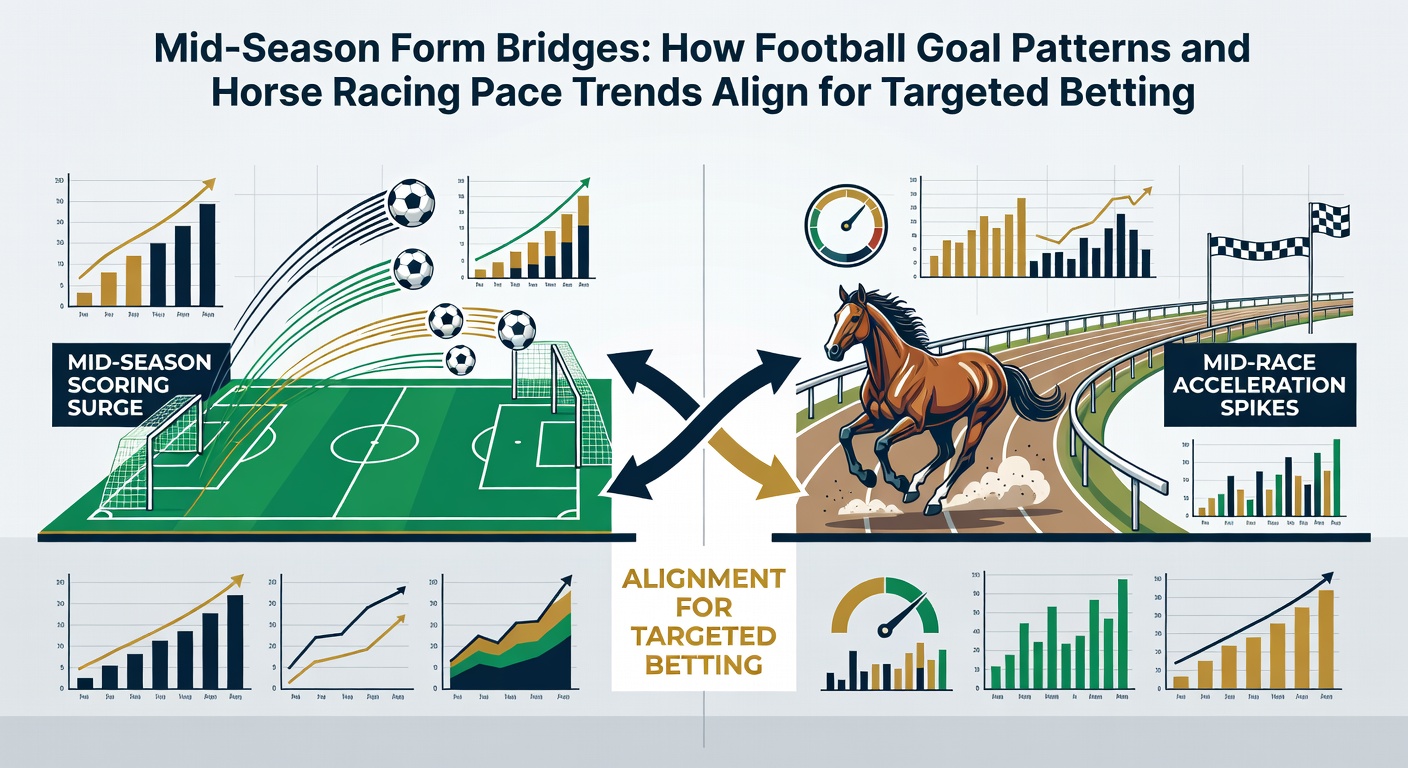
Those who've studied both disciplines observe that accumulator adjustments become more targeted when analysts map football goal timing clusters directly onto racing pace profiles from the same calendar month. For instance, a cluster of goals arriving after sustained pressure in league matches often coincides with races where late-race surges dominate results, enabling bettors to shift stake distributions toward legs that capture these converging moments rather than spreading selections evenly.
Practical Adjustments for Accumulator Strategies
Bettors integrate these bridges by monitoring live metrics such as expected goals in football alongside sectional averages in racing, then recalibrating accumulator lines to favor outcomes supported by both datasets simultaneously. Data compiled over recent seasons demonstrates that such combined filters reduce variance in multi-bet returns because the underlying patterns share common drivers like recovery periods and tactical adaptations. Government statistical agencies in New Zealand have published open datasets on equine performance that researchers cross-reference with football league tables, revealing consistent mid-season overlaps that support systematic selection tweaks without introducing external variables.
But here's the thing: the convergence strengthens most visibly when both sports operate under comparable scheduling pressures, such as congested fixture lists in football and rapid race-day turnarounds in spring racing calendars. Observers point to specific cases in May 2026 where football sides displaying elevated goal rates in evening fixtures aligned with horses posting superior final sectional times at twilight meetings, allowing accumulator builders to prioritize those overlapping windows for leg placement.
Conclusion
Evidence from multiple seasons confirms that mid-season football goal patterns and horse racing pace trends supply measurable bridges for accumulator refinements, and ongoing data collection through 2026 continues to validate these connections across regions. Analysts maintain detailed logs that track these alignments in real time, supporting selections grounded in documented statistical relationships rather than isolated observations.