6 Jun 2026
How Meteorological Shifts Influence Results at Open-Air Venues and Extend to Multi-Level Betting Frameworks
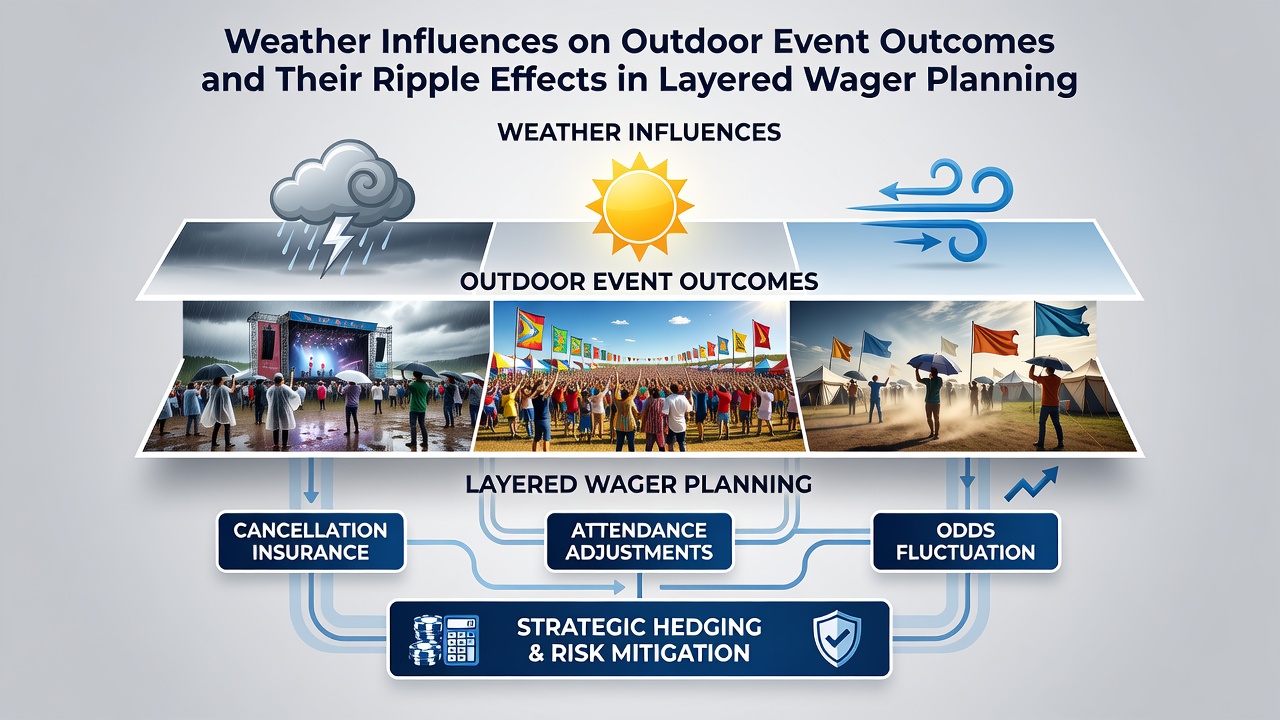
Weather conditions exert direct pressure on outdoor events through temperature swings, precipitation levels, wind speeds, and humidity changes that alter playing surfaces, equipment performance, and participant endurance across sports like tennis, golf, horse racing, and cricket. Observers note that these atmospheric factors frequently modify event timelines, scoring patterns, and overall results, which in turn prompt recalibrations in wager structures that rely on sequential or conditional bets. Data from meteorological agencies show that such influences appear consistently across seasons, with June 2026 records indicating elevated rainfall totals in several European and North American regions that coincided with major open-air tournaments.
Researchers have documented how rain delays in tennis tournaments extend match durations and shift momentum toward players who adapt better to interrupted rhythms, while strong winds in golf events increase shot dispersion and elevate scores on exposed courses. These variables do not operate in isolation because they interact with venue-specific topography and scheduling decisions that organizers implement to maintain safety standards. Figures released by the Australian Bureau of Meteorology reveal that wind gusts exceeding 40 kilometers per hour during outdoor horse racing meets in recent years correlated with higher rates of non-finishing horses and adjusted track conditions that favored certain post positions.
Direct Effects on Event Mechanics and Participant Performance
Precipitation changes the coefficient of friction on grass and clay courts, forcing players to modify footwork and spin application in ways that favor baseline grinders over aggressive net rushers during wet periods. Temperature extremes similarly affect muscle elasticity and hydration requirements, leading to increased error rates when thermometers climb above 30 degrees Celsius or drop below 10 degrees. Those who have analyzed competition logs find that humidity levels above 70 percent often slow ball speeds in cricket and baseball, extending innings and altering run totals in measurable patterns. Such shifts create immediate consequences for event organizers who must decide whether to suspend play, shorten formats, or relocate segments to covered areas when conditions deteriorate rapidly.
Case Examples from Recent Seasons
Take one major golf championship held in June 2026 where persistent fog reduced visibility and caused multiple tee-time postponements that compressed the final rounds into fewer daylight hours, prompting officials to implement shotgun starts and modified cut lines. Another instance involved a horse racing festival where sudden thunderstorms turned turf into a heavy surface, elevating times for front-runners and rewarding closers who conserved energy earlier in the card. These documented adjustments demonstrate how weather does not merely interrupt events but actively reshapes competitive hierarchies and statistical outputs that feed into downstream planning processes.
Ripple Effects Through Layered Wager Structures
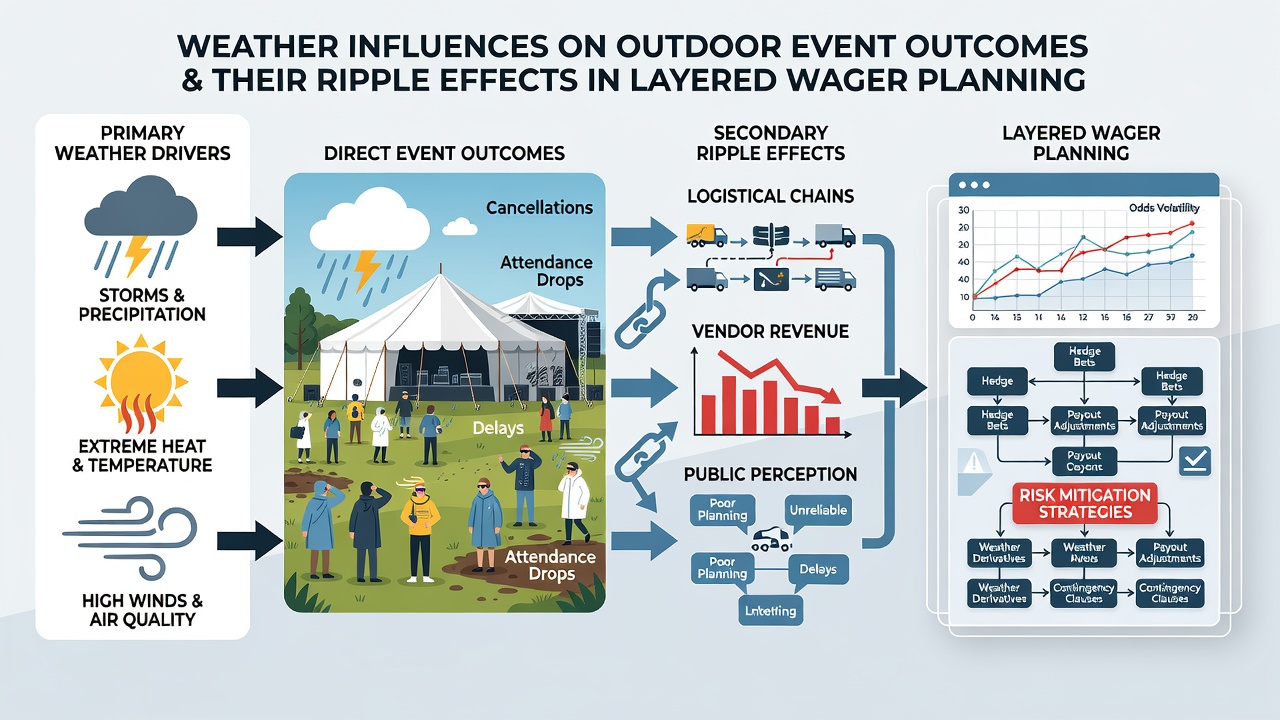
Layered wager planning incorporates multiple conditional steps where initial outcomes determine subsequent stake sizes, selections, or hedging actions, and weather-induced changes at the event level propagate through these sequences. When an outdoor tennis match extends due to rain, for example, live odds adjust in real time while accumulators that include that leg require immediate reassessment to maintain target returns. Data indicates that wind-affected golf rounds produce score distributions that deviate from historical averages, which then influences the viability of over-under propositions and head-to-head matchups built into multi-leg frameworks.
Those who track betting markets observe that horse racing tracks reporting altered going descriptions after precipitation often see liquidity shifts in exotic bets such as exactas and trifectas because punters recalibrate probabilities around pace and stamina demands. The interconnected nature of these layers means that a single weather delay can trigger cascading modifications across an entire portfolio, requiring dynamic models that integrate meteorological forecasts with historical performance data under similar conditions. Research from university climatology departments has shown correlations between seasonal weather anomalies and variance in event statistics that exceed random fluctuation thresholds.
Integration of Forecasts in Planning Adjustments
Modern wager frameworks increasingly incorporate ensemble weather predictions that provide probability ranges for key variables such as rainfall accumulation and wind vectors over event durations. Organizers and analysts cross-reference these forecasts with venue microclimates to anticipate surface changes and schedule impacts before competitions begin. According to reports from the National Oceanic and Atmospheric Administration, improved resolution in short-term forecasting has enabled more precise timing of outdoor segments, although residual uncertainty remains when convective activity develops faster than models project. This integration allows layered strategies to include contingency branches that activate when specific weather thresholds are crossed, such as switching from outright winners to place markets or reducing stake multiples when rain probability exceeds 60 percent.
Additional examples include cricket series where dew formation on evening pitches alters spin behavior, prompting teams to adjust batting orders and corresponding bettors to revise over-under totals accordingly. Observers note that these adaptations occur systematically rather than sporadically because historical datasets now contain sufficient weather-tagged entries to support statistical modeling. The process remains iterative, with each new data point refining the accuracy of conditional pathways within multi-tiered wager designs.
Conclusion
Meteorological conditions continue to serve as primary drivers of variability in outdoor event outcomes, creating measurable deviations in performance metrics that extend through sequential wager layers. Evidence from multiple regions demonstrates consistent patterns where precipitation, wind, and temperature modify results in predictable directions once sufficient historical context is applied. As forecasting capabilities advance, the capacity to embed these variables into structured planning models grows accordingly, supporting more responsive adjustments across the full spectrum of outdoor competitions.