22 Jul 2026
Daylight Variations and Their Influence on Form Readings Across Multi-Sport Accumulator Strategies
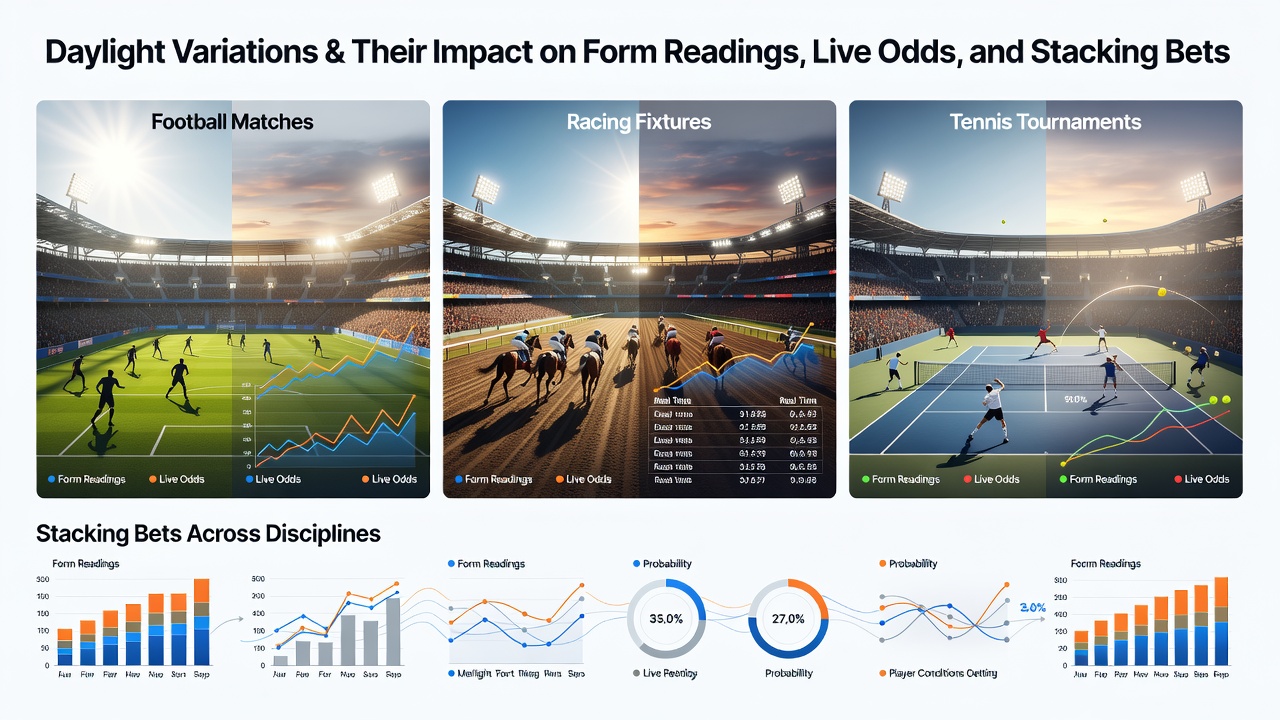
Daylight variations occur across seasons and latitudes, and they alter athlete and equine alertness through circadian rhythms that affect reaction times, endurance levels, and recovery rates in football matches, racing fixtures, and tennis tournaments. Data from sports science studies shows that extended daylight hours in summer months shift peak performance windows, which in turn influences how form guides interpret historical results when bettors build accumulators across multiple events. In July 2026, the ongoing European football pre-season schedules and northern hemisphere racing festivals coincide with peak daylight duration, creating measurable deviations in live odds as bookmakers adjust for these biological factors.
Football Match Scheduling and Performance Metrics
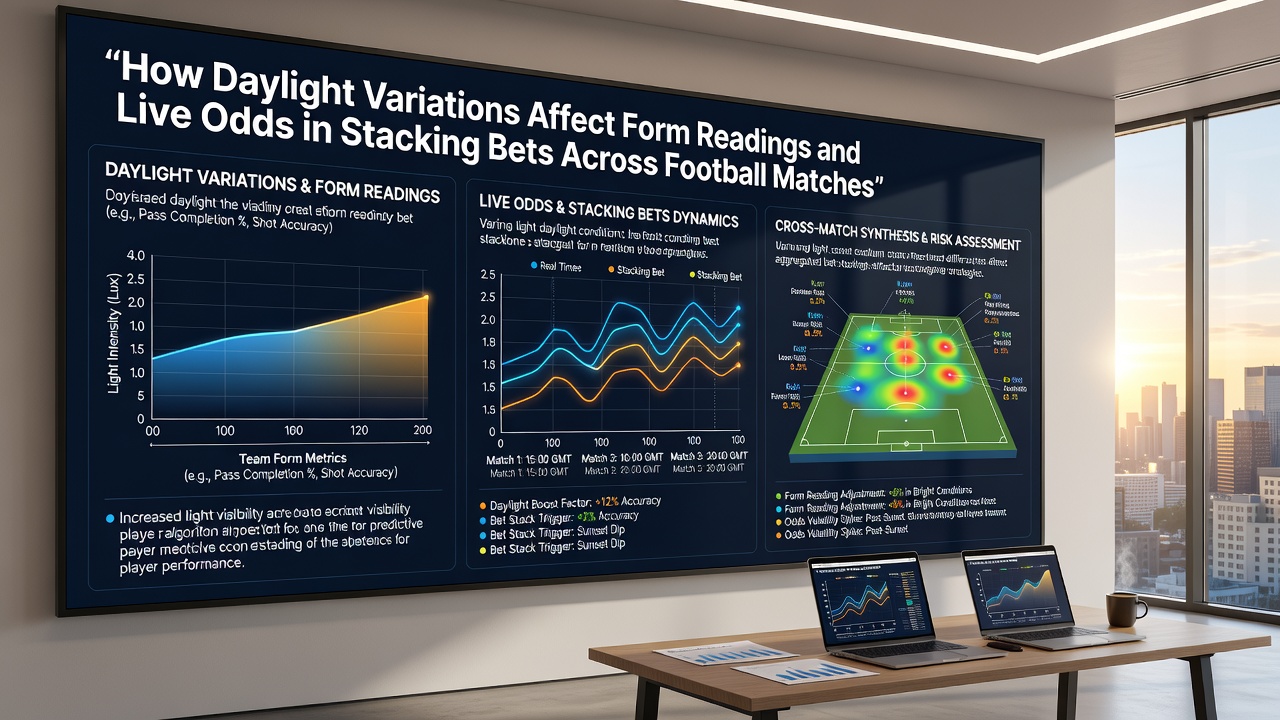
Football leagues in northern Europe experience longer evening daylight during July fixtures, and researchers at institutions like the University of Oslo have documented that players exhibit delayed fatigue onset when matches start after 8pm local time. Form readings compiled from winter data therefore underrepresent summer evening stamina, prompting oddsmakers to recalibrate live lines on total goals and player props. Bettors stacking accumulators that include both domestic leagues and international friendlies must account for these shifts, because historical goal averages from darker months diverge from current outputs when natural light extends visibility and reduces error rates on long passes.
Racing Fixtures and Equine Circadian Responses
Horse racing fixtures adapt start times to available daylight, and studies compiled by the Australian Equine Science Centre indicate that thoroughbreds display heightened cortisol levels during late-afternoon races under prolonged summer light. This pattern changes sprint times and stamina projections that form analysts rely upon, especially when comparing results from winter meetings held under floodlights. Live odds on place markets and exotic bets fluctuate accordingly, since data sets that ignore daylight-adjusted performance produce inflated or deflated probabilities in multi-leg racing accumulators.
Tennis Tournaments and Outdoor Court Dynamics
Tennis tournaments scheduled across different time zones expose players to rapid daylight changes, and evidence from longitudinal tracking by the International Tennis Federation shows that serve percentages and error counts vary with sunset timing. Morning sessions under full daylight favor baseline consistency, whereas twilight conditions increase unforced errors as visual adaptation lags. Form readings drawn from indoor hard-court events therefore require adjustment when integrated into accumulators that also feature outdoor grass or clay matches, because live odds reflect these environmental variables in real time.
Accumulator Construction Across Disciplines
Stacking bets that span football, racing, and tennis demands cross-referencing of daylight-adjusted datasets, and analysts at the Canadian Sport Institute have noted that ignoring seasonal light exposure leads to systematic mispricing in combined markets. In July 2026, concurrent events such as Wimbledon and major racing festivals provide overlapping opportunities where bettors can test these correlations, yet the resulting live odds incorporate real-time adjustments for circadian fatigue that standard form tables overlook. Those constructing accumulators therefore consult multiple performance databases that segment results by start time and latitude to refine selections.
Regulatory bodies including the Australian Competition and Consumer Commission track how such environmental variables influence betting product design, and their reports highlight that transparent disclosure of performance factors helps maintain market integrity. Observers note that platforms incorporating daylight metrics into their algorithms display narrower margins on accumulators once these variables enter the models.
Conclusion
Daylight variations reshape the statistical foundations that underpin form analysis and live odds across football, racing, and tennis, requiring bettors who stack multi-sport accumulators to integrate time-of-day and seasonal data into their evaluations. As July 2026 schedules unfold, the interplay between natural light cycles and competitive outputs continues to inform how markets price combined selections, with evidence from multiple research sources confirming that these environmental elements produce measurable deviations from historical baselines.