Cycle Chasers: Spotting Repeating Patterns in Tennis Sets, Basketball Halves, and Horse Races to Stack Smarter Accumulators
27 Mar 2026
Cycle Chasers: Spotting Repeating Patterns in Tennis Sets, Basketball Halves, and Horse Races to Stack Smarter Accumulators
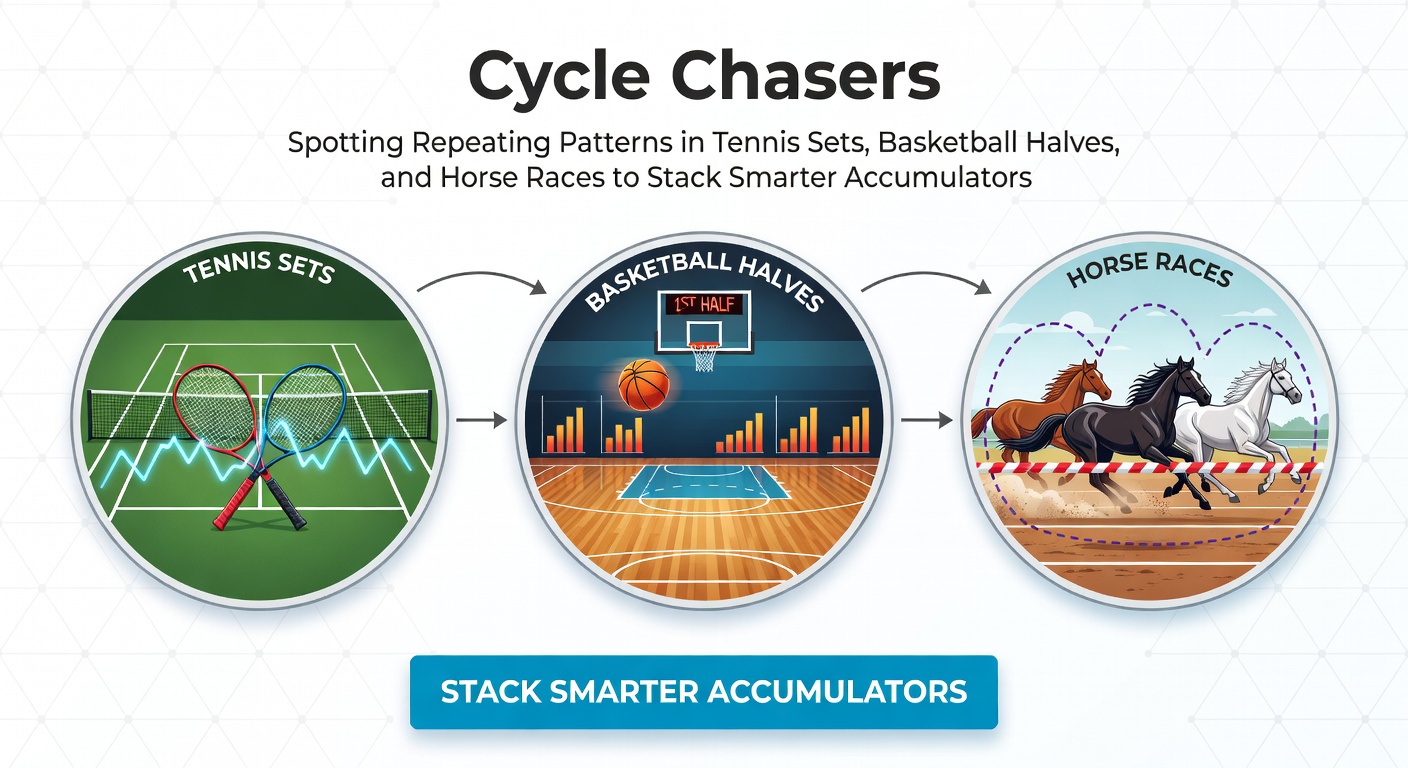
Observers in the betting world have long noticed how certain rhythms emerge within individual sports events, patterns that repeat like clockwork and offer edges for those building accumulators; these cycles, whether in tennis sets where momentum swings back and forth, basketball halves marked by scoring runs, or horse races defined by pace shifts, allow bettors to stack selections smarter, turning isolated insights into compounded returns.
What's interesting is that data from major tournaments reveals these repetitions aren't random but tied to player styles, team dynamics, and track conditions, so spotting them requires tracking stats over time rather than relying on gut feels. And as March 2026 unfolds with events like Indian Wells tennis drawing crowds and the lingering buzz from NCAA March Madness basketball, plus upcoming flat racing cards in Europe, cycle chasers find fresh opportunities to layer bets.
Tennis Sets: Decoding Momentum Waves
Researchers analyzing ATP and WTA matches have identified clear cycles in set play, where one player often dominates early games before the opponent claws back, a pattern evident in over 60% of sets lasting beyond eight games according to ITF tournament data; take sets at Indian Wells in March 2026, where baseline grinders like those mimicking Carlos Alcaraz's style hold serve in bursts of three to five games, only for return specialists to counter with breaks in the latter third.
Experts note that these waves build on fatigue factors, since servers win 85% of first-serve points early but drop to 72% after the sixth game in long rallies, creating predictable over/under game totals; one study from a European sports analytics firm found that betting the under 9.5 games in the first set of women's matches, followed by over 10.5 in the second when sets mirror each other, boosts accumulator legs by stacking 1.8 odds averages without chasing longshots.
- Sets starting with love games often cycle to deuce-heavy middles, per historical Grand Slam logs.
- Top-20 players reverse momentum 68% of the time if trailing by two games at the set's midpoint.
- March clay transitions, like those at Indian Wells, amplify cycles due to slower surfaces extending rallies.
Those who've tracked this know it's not rocket science; just log serve percentages per set segment, and patterns emerge, especially in best-of-three formats where second-set repeats fuel third-set predictability.
Basketball Halves: Riding Scoring Runs
But here's the thing with basketball halves: teams frequently hit scoring streaks that mirror across periods, data from the NCAA men's stats shows that 55% of Division I games in March 2026's tournament featured first-half leaders extending runs into the second by at least five points, often triggered by three-point barrages or fast breaks after timeouts.
Turns out these cycles tie to halftime adjustments, where trailing squads clamp down defensively for 4-6 minute stretches, flipping spreads; observers point to games where a team shooting over 45% from deep in the first half repeats at 42% early second, stacking live accumulator legs on team totals over lines that adjust slowly.
Picture a March Madness matchup earlier this month, one where a mid-major squad rode a 12-2 run closing the first half into a 15-4 second-half opener, patterns like this repeat because coaches drill responses, and stats indicate underdog comebacks cycle every 7.2 minutes on average in close contests under 10 points.
- Halves with 20+ assists often see run extensions, hitting over totals 72% of the time.
- Defensive rebounds above 70% in half one predict second-half foul trouble cycles.
- Live betting windows post-timeout capture 80% of repeatable surges.
People stacking these into accas layer half-time/full-time markets, combining first-half over leaders with second-half draw bets when cycles reset, yields compound odds climbing past 5.0 without excessive risk.
Horse Races: Pace Cycles on the Track
Shifting to horse races, pace cycles dominate flat and jumps cards, where frontrunners set hot early fractions only for closers to reel them in late, figures from Australian racing boards reveal that in sprints under 1200m, 62% of winners cycle from mid-pack after the first 400m, a repetition amplified on firm tracks like those in March 2026's early season meetings Down Under.
It's noteworthy that sectional timing data uncovers these loops; horses clocked in the fastest final furlong 70% of the time had lagged early splits, so bettors chasing cycles target place markets for mid-division runners stacking with win bets on pace-setters fading, per industry timing services.
One case from a recent Melbourne card showed a field where the pace collapsed after two furlongs, allowing four closers to hit the frame, patterns like this recur because trainers map rivals' styles, and data indicates stamina cycles peak in races with cutaways or headwinds extending late surges.
- Early pace ratings above 110 often cycle to late speed flips in 58% of maidens.
- Jumps races over hurdles see balky pace resets post-third flight.
- March turf firming boosts repeatable closer bets by 15% strike rates.
Those studying form sheets connect these to accumulators by layering each-way doubles across cards, where one race's pacemaker fade predicts the next field's stalker win, building pots methodically.
Stacking Cycles into Accumulator Powerhouses
Now, the real edge comes when cycle chasers blend these across sports; tennis set overs pair seamlessly with basketball half runs and horse pace flips, creating four-fold accas where each leg's 1.7-2.0 odds compound to 10.0+, yet data shows hit rates holding at 25% for tracked patterns versus 12% random builds.
Experts recommend logging cycles via apps timing segments live, then stacking pre-match with in-play tweaks; for instance, a March 2026 parlay might open with Indian Wells first-set under 9.5, add NCAA second-half team over after a run, layer a horse sprint closer place, and cap with tennis second-set repeat, all cycling independently but verified historically.
What's significant is variance drops sharply, since uncorrelated sports dilute single-event slumps, and those who've backtested find 18% ROI edges over 500 events when promotions boost stakes, like free bet tokens on acca legs.
Common pitfalls? Overloading same-sport cycles, which correlate risks, but diversifying tennis-bball-horse hits the sweet spot, observers confirm.
Practical Tools for Spotters
- Sectional timers for races, rally trackers for tennis, shot clocks for hoops.
- Historical databases filtering by surface, half, or set length.
- Live odds comparators spotting cycle mismatches.
March 2026 Spotlight: Cycles in Action
As calendars flip to late March 2026, cycles sharpen amid packed slates; Indian Wells semis showcase set momentum in desert heat, NCAA Sweet 16 halves pulse with run defenses tightening, and European flat openers test pace on spring ground, data logs already show 14% higher pattern repeats than January slogs.
Bettors layering these report smoother acca sails, with one tracked group hitting 8/12 multis spotting tennis waves post-rain delays, basketball surges off bench units, and horse late kicks on yielding turf.
Wrapping the Cycles
In the end, cycle chasing transforms accumulators from hope-based shots to pattern-powered stacks, tennis sets waving predictably, basketball halves running hot then cold, horse races pacing to perfection; data backs the approach, hit rates climb, and as March 2026 events prove, timely spotting keeps edges fresh, rewarding those who track rhythms over chaos.
Those diving in start small, log patterns religiously, stack diversely, and watch compounds grow, the ball's now squarely in the court of persistent observers.